Another repair bill, another couple of hundred bucks out of your wallet, and the leak is still there.
If that sounds familiar, these are the signs you need a roof replacement instead of another roof repair. Asphalt shingle roofs are built to last 15 to 30 years, and once a roof clears the halfway point, repairs tend to stop fixing the problem and start just delaying it.
The question isn’t whether your roof really does need work. What matters is, will repairing your roof fix this? Or have you passed the point of no return in terms of cost, where replacing the whole thing is less expensive?
Contractors use certain criteria to decide when repairs won’t solve the problem, and when it’s cheaper to replace the entire roof. They use specific numbers to reach that decision. There are also some very specific visual signs that tell you if you’ve reached that point.
Key Takeaways
- Asphalt shingle roofs last 15 to 30 years. Once repairs pile up past the halfway mark, replacement usually beats more patching, financially.
- Water stains, sagging attic areas, and rising energy bills point to interior failure that needs a professional inspection, and probably a full replacement.
- New England’s freeze-thaw cycles, heavy snow, and ice dams wear roofs out faster than milder climates do.
- Contractors use a 50 percent cost-ratio rule: once repairs cross half the replacement price, replacement wins.
- Repeated repairs can void manufacturer warranties, raise insurance premiums, and trap homeowners in a repair cycle that costs more than a new roof would have.

Visible Exterior Warning Signs
Some of what is wrong with a roof can be seen while standing on the ground. You do not need a ladder to see those problems. You simply need to know what you’re seeing.
Look at repeated failure areas first. If you repair an area and that exact area leaks again shortly thereafter, the roof is telling you something: the system underneath has already given out.
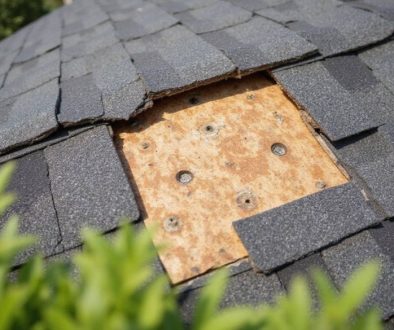
Cracked, curling, or missing shingles
All cracks, curls and gaps mean one thing: water is getting somewhere it should not.
When a shingle develops a crack, that crack allows water to enter the layer(s) under the shingle. That water then travels much farther than you would think. Shingles curl due to either aging or extreme temperature changes. Once curled, a shingle loses its ability to shed water correctly. A missing shingle is simply the most obvious example of the same problem, a section of decking is now exposed directly to the elements and usually creates additional problems.
There is a pattern you should be aware of. If a shingle you replaced once disappears again within a season or two, you do not have bad luck, you have a worn out part of your roof where patching cannot reach. Granule loss works the same way: once the granules are gone from a section of roof, that section is left vulnerable to UV radiation and moisture, and they never grow back.
Buckling or warping of a section of roof shows that the primary problem is excess moisture trapped behind it, usually caused by an issue with either the ventilation or decking system rather than the shingle itself. Because of the high humidity levels found in New England, these issues develop and occur much sooner than they would in areas with lower humidity levels.
Widespread damage like this is when contractors use the cost-ratio rule, weighing repair costs against the price of a full replacement. Widespread shingle damage can also render the remaining warranty provided by the manufacturer null and void, making each future repair estimate more costly. A licensed roof repair contractor may find additional damage hidden beneath the cracks you can already see from the ground.
Weather conditions in New England create rapid degradation of your roof through multiple freeze-thaw cycles, massive amounts of snowfall, and almost constant moisture. Roofs in New England generally do not last as long as they would in areas with milder climates.
Moss, mold, or algae growth
Moss and algae can do far more than simply look unsightly. In addition to creating an unappealing appearance, they also trap the moisture that falls on your shingles. As a result, that moisture sits right next to the shingles, quietly damaging the roof from beneath.
The numbers on this are worse than most people expect. Roofing lifespan data analyzed by industry experts shows unchecked moss growth can cut 10 to 15 years off an asphalt shingle roof’s lifespan. The roots physically lift the shingles and hold water against the underlayment underneath, which isn’t a cosmetic problem. That’s a decade or more of roof life, gone.
Don’t scrape it off yourself. Scraping tears up the shingle surface underneath and usually makes the damage worse. Let a professional roofer assess it safely instead.
A roof with significant amounts of moss, algae or standing moisture is likely a roof that is aging poorly and is failing to drain properly. Fairfield County CT commonly deals with this issue throughout New England’s rainy season. Water should run off quickly. When it doesn’t run off quickly enough, plants like moss and algae move in.
If most of the roof displays significant amounts of growth along with the inability to drain water efficiently, consider getting a roof replacement cost estimate from a licensed roof repair contractor. By catching issues such as this early, you prevent water from entering into the attic, insulation and walls.
Granule loss and bald spots on shingles
Asphalt shingles lose their granular covering (pebbles) much like how dogs shed fur during warmer months. These granules are lost continually, and they are the roof’s real defense against the sun and New England weather conditions. Observe how many granules collect within the gutters after a rainstorm, observe areas on your roof with no granules present revealing the underlying exposed asphalt, and notice the shiny or darker colored patches on the surface of your roof.
Once you see these types of patches developing on your roof, the clock starts ticking. Once granules begin to disappear, they never regrow. This type of damage continues to compound itself until replacement becomes necessary.
A roof over 10 years old with significant granule loss needs replacement, not another patch. Plenty of homeowners try to ignore it, hoping one more repair buys them time. It won’t, because granule loss is underlayment deterioration wearing a disguise. The shingles can’t shield the house anymore, and water finds its way into the attic and the walls regardless.
If you are looking for professional roof repair near me or a licensed roof repair contractor in Fairfield County CT, getting a roof repair estimate is a good starting point. A pro can identify granule damage you’d never spot from the ground, and determine if affordable roof repair or a complete new roof installation is best suited for your specific situation.
Interior Indicators of Roof Damage
Roof problems do not stay confined outside. They appear inside as stains on ceilings, soft spots in attics, and increased energy bills without explanation.
Water stains or leaks on ceilings
Stains represent roof leaks that have already occurred. Stains on ceilings are typically brown or yellow, indicating water is currently passing through all layers of the roof. After a heavy rain, using a flashlight to inspect the attic area will often reveal where the leak is coming from.
Flaking paint indicates the same moisture has penetrated the drywall behind it. When there is an odor of mildew or mold in an attic space or higher room area this represents mold growth due to high levels of dampness, and should be taken seriously. Moisture laden insulation indicates the underlayment or flashing has failed, allowing water to get right past the shingle layer. The worst indication of roof damage is sagging drywall or soft ceiling spots representing significant structural issues resulting from prolonged water intrusion.
The first clue to when a repair turns into a replacement is if the stain keeps coming back, spreads across the surface, or shows up in a new spot. When this happens it typically indicates that patching isn’t working anymore. On top of that, leaks in several different parts of your home at once mean you have reached the tipping point regarding when you should replace your roof. In most cases at this stage it would cost less to replace your roof than to continue repairing the current issues.
Sagging areas in the attic
Softness or sagginess of your roof deck are some of the larger warning signs your attic can provide. Wavy or dipping lines on your roof line generally mean that the support beams under the decking are rotting or deteriorating and that you need immediate attention.
To check for wavy lines or low points in the attic take a walk through the space several times. If you see uneven or sagging lines then you know that trapped moisture is the source of the problem and once it begins moving, damage occurs rapidly. The water causes the wood framing to begin decaying, the structural integrity of the house weakens, and what was meant to be a protective barrier over your house becomes a liability.
If you find a soft spot in your attic it generally indicates that water has already entered that space and the deck cannot support weight. Typically at this point replacement rather than additional repair is needed.
Many homeowners have saved a lot of money on roof replacement cost in Connecticut when they caught their sagging before the time came to replace the entire structure. For those that wait until the structural failure is complete, an insurance company may decline a claim because the deterioration could be seen as being overlooked by the homeowner. It would be best to get a roof replacement estimate from a licensed roof repair contractor near me now, because most structural failures this severe are directly related to how old your roof is.
Rising energy bills from poor attic ventilation
There is normally a secondary issue behind the primary cause of a sagging attic. This second cause also appears on the utility bill. Poor ventilation makes the attic behave like a non-functional air conditioning unit for the home, making the HVAC work longer and harder than needed in order to maintain the temperature inside the home.
The scale of it is bigger than most people assume. Guidelines from the U.S. Department of Energy note that poor attic ventilation can push summer attic temperatures above 150 degrees, baking the shingles from below and raising household cooling costs by up to 20%. That’s real money leaving the budget every month, not a rounding error.
The attic is meant to breathe. When poor ventilation exists in an attic, warm air leaks out into the cold during the winter months and hot air becomes trapped in the attic during the warmer months. In turn, the homeowner pays to heat or cool both their house and the neighborhood.
Many homeowners across Connecticut begin looking for roof repair near me immediately after seeing their electric bills spike with no obvious explanation. A roof inspection will reveal issues with ventilation that cannot be seen from the ground, therefore it is well worth comparing roof replacement cost in Connecticut against another band-aid solution if their electricity bills continue to climb.
Age and Lifespan of the Roof
Every roof comes with an end date. New England’s weather is so harsh (cold winters and hot, humid summers) that it makes a roof’s life expectancy much shorter than many homeowners anticipate.
Roof nearing or exceeding its expected lifespan
Asphalt shingle roofs typically last 15 to 30 years, though the exact number depends on the type installed:
Roof Type Expected Lifespan
Three-tab asphalt shingles 12 to 17 years Architectural shingles 20 to 25 years Asphalt shingles (overall range) 15 to 30 years Overlay (new shingles over old) Replace after 20 years
If a roof is pushing 15 years old, it’s a good time to start gathering a roof replacement cost estimate for Fairfield County CT or wherever you’re located. New England weather isn’t kind to any of these materials. Freeze-thaw cycles, heavy snow loads, and ice dams accelerate wear well past what a milder climate would produce, and plenty of roofs look fine from the street while quietly falling apart underneath.
A roof’s age tells you a lot and it adds up: a roof older than it was meant to last is a risk to your home on its own, and the manufacturer warranty often voids after repeated patch work anyway. A licensed roof repair contractor can inspect your entire roof and let you know if it still has miles left or is running out of gas. A roofing estimate will give you actual numbers to base your budget on, because the cost to replace a roof in Connecticut will only continue to rise the longer you delay.
How New England weather accelerates roof wear
Each season creates its own damage to your roof. Freeze-thaw cycles cause constant expansion and contraction in shingles. Ice dams develop at the edge of gutter systems causing water to flow backward under the shingle line. Road salt spray on metal flashing and fasteners causes corrosion. Snow weighs heavily on the entire system creating stress and compression. Summer heat bakes asphalt until it becomes brittle and begins cracking.
Spring rains find each weakness created throughout the years. Fall adds heavy amounts of wet leaves that hold moisture directly against the surface. If you repeat this process year after year then your roof can pack decades worth of damage into just a few short seasons.
A roof that might last 20 to 25 years somewhere milder often fails much sooner here in Connecticut and Fairfield County specifically. The humid climate also feeds moss, mold, and algae, and freeze-thaw action loosens protective granules faster, so cracking, curling, or missing shingles tend to show up by year 10 or 12 instead of year 15 or 20.
Insurers and roofing contractors both recognize this regional pattern when they set replacement timelines. That’s where the cost-ratio rule can help make the decision to replace your roof easier.
Repeated Repairs and Persistent Issues
Calling a roof repair contractor near me for the same leak again and again means the roof is telling you it needs to be replaced and no longer patched.
Frequent shingle replacements or recurring leaks
When a new area of the roof leaks and you need to go back and fix it again and again, it does not mean the roof is having an extended series of small failures; it simply indicates that the entire roofing system is failing piece by piece.
Multiple leaks in different areas mean the underlayment, flashing, or shingles have failed broadly, in a way patch jobs can’t fix for good. Replacing shingles more than twice in three years is usually the tell that a roof has reached the end of its useful life, and every temporary fix along the way costs money that eventually stacks up past the price of a full installation. Worse, repeated patch repairs can void the manufacturer’s warranty entirely, leaving a homeowner to pay out of pocket for problems a new roof would have simply covered. It’s why licensed roof repair contractors often recommend replacement once they spot multiple problem zones on the same roof.
Repairing multiple areas of your roof will add up quickly, and that money could have gone toward a new roof with a warranty attached. Before you pay for the next patch, price out roof replacement cost Fairfield County CT options too.
Manufacturer warranty voidance from repeated patch repairs
Every time you perform a patch job on your roof, you are reducing the amount of coverage left under your warranty.
Most roofing contractors will tell you the same thing: repeated repairs void the manufacturer’s warranty, because each patch signals an underlying problem the manufacturer eventually decides the roof no longer meets standards for. This isn’t a scare tactic. Based on warranty guidelines from major manufacturers like GAF and CertainTeed, using incompatible sealants, temporary patches, or non-matching materials in an unauthorized DIY fix can instantly void the material defect warranty. One wrong tube of sealant can erase thousands of dollars in coverage.
Every patch creates a paper trail. Manufacturers document the repairs, and once a roof crosses their threshold, that coverage is gone for good.
Insurance companies also observe this type of trend and if they see that you continue to have repeat calls for repairs on your roof, they can raise your insurance premium or deny claims related to water damage. You should consult a local roof repair contractor about how many times your roof can realistically be repaired and how much of your coverage is at stake before a full replacement in Connecticut comes out of pocket anyway. Getting a roof replacement estimate now beats losing that coverage later.
Repair vs. Roof Replacement: How to Know Which Makes Financial Sense
It all boils down to basic arithmetic: the age of your roof, and what your budget will bear.
The cost-ratio rule contractors use to decide
The formula contractors use is straightforward. Compare the repair cost to the price of a full replacement. Cross 50% of that replacement cost in repairs, and most professionals will tell you to replace the whole roof rather than keep patching it, because past that point, repair spending is just good money following bad.
Here’s what that 50% line looks like in real numbers. According to 2026 Connecticut pricing data, a standard asphalt shingle roof replacement in the state runs $12,000 to $16,000 on average, putting the 50% threshold at roughly $6,000 to $8,000 in accumulated repairs.
2026 Connecticut Numbers Typical Range
Average asphalt shingle roof replacement cost $12,000 to $16,000 50% repair threshold (replacement becomes smarter) $6,000 to $8,000
A roof repair contractor can do this during a roof repair estimate, comparing the price of the current fix with what a total roof replacement would really cost. Whether you live in Fairfield County CT or throughout Connecticut, a roof replacement estimate will help show you the larger picture, and paying more up front often saves you thousands in the long run, because it ends the cycle of repairs and comes with a new warranty.
How roof age can affect insurance claims and premiums
Age plays a real role in what an insurance company is willing to cover. Older roofs get less coverage and trigger higher premiums, because insurers see them as a bigger risk, and some won’t cover a roof over twenty years old at all.
It can get worse than higher premiums. According to the Connecticut Insurance Department, if an aging roof degrades to the point where private insurers deny or decline to renew coverage, homeowners can end up on the CT FAIR Plan, the state’s insurer of last resort. Waiting too long on a replacement can genuinely cost you your private coverage, not just a discount on it.
That’s why getting a roof replacement estimate in Fairfield County CT sooner rather than later matters, before the roof ages out of coverage altogether. There’s help available too: some insurers connect policyholders with vetted contractors, like Amica Insurance’s Home Repair Assistance Program, which links homeowners with licensed and insured pros for the work. Older roofs still mean higher deductibles and smaller payouts when damage happens, and insurers may require a professional inspection before approving any claim at all. The cost to replace a roof in Connecticut gets a lot easier to manage when insurance helps cover it, but that help shrinks the older the roof gets.

What a Professional Roof Inspection Catches That You Can’t
A licensed and insured roof repair contractor knows where to search: problems behind shingles, within the attic space, and at the flashing, which many homeowners would pass by as they go about their daily lives.
A qualified inspector checks the parts of a roof that fail silently:
Underlayment condition beneath the shingles
Flashing around chimneys, vents, and valleys
Attic ventilation and moisture buildup
Drainage patterns and gutter performance
They will also analyze the amount of wear on each material due to New England weather conditions, if there is enough life left in the roof to get you through one more winter (or two), and spot issues that are not visible to the average homeowner, such as moisture trapped by poor ventilation, and flashing beginning to fail.
A professional roof repair company in Fairfield County CT will provide the proper equipment, knowledge, and trained eyes needed for the job. They will be able to advise you which sections of shingles require replacement and identify those portions of the roofing system that are quietly failing. A roof replacement estimate from a professional contractor will help you decide before a minor issue develops into an expensive crisis, by explaining the cost-ratio rule and identifying any potential issues that may affect your ability to make an insurance claim.
What Happens If You Delay Replacement Too Long
It can be compared to a small leak in the basement, if you ignore the roof damage, it will only get worse. The longer you wait to replace the roof, the sooner the roof deck will degrade.
Here’s what that delay actually costs:
- Structural damage compounds quickly once moisture gets inside.
- The HVAC system works overtime, pushing energy bills up month after month.
- Mold and mildew thrive in damp spaces, creating real health risks for the household.
- Insurance coverage may be reduced or denied outright if the damage stems from neglect.
- Accumulated repair costs can end up costing more than one complete roof replacement would have.
Homeowners in Fairfield County CT often end up searching for emergency roof repair near me only after water stains show up on the ceiling, by which point the damage started weeks or months earlier. Delaying traps a homeowner in a cycle of temporary fixes that never actually solve anything, generally right around that same 50 percent mark of replacement cost where the cost-ratio rule kicks in.
In addition to age, weather also plays a major role. In the New England area, winter snows and spring rains cause roofs to wear down much faster than they would in other climates. Eventually the persistent leaks and structural issues in a roof will create unsafe conditions for the occupants of the house. When this occurs, homeowners are forced to make a quick decision under pressure instead of on their own schedule. A roof replacement estimate before the roof degrades past the point of no return protects a homeowner’s investment, the health of the occupants of the home and the wallet all at one time.
Conclusion
Your Roof Deserves Better Than Band-Aid Fixes
A roof does many things to help keep a home safe from the elements. Therefore, when a roof begins to send signals (cracking shingles, water staining in the attic, increasing energy bills) through various means, it is time for a homeowner to have a licensed contractor inspect the roof.
North East Roofing & Home Improvement can provide a roof replacement quote in Fairfield County CT, so you understand your real costs and options before deciding anything.
Stop pouring money into repairs that won’t hold. Start planning a replacement that protects your family and your wallet for the next 15 to 30 years.
For a roof inspection and replacement quote, call North East Roofing & Home Improvement at (203) 912-4059 or email neroofinghome@gmail.com, and get a straight answer on whether repair or replacement is the smarter move for your home.